Wall, window, or banner? Plan graphics around the space
Match your message to the surface, the viewing distance, and how long the graphics need to be in place.
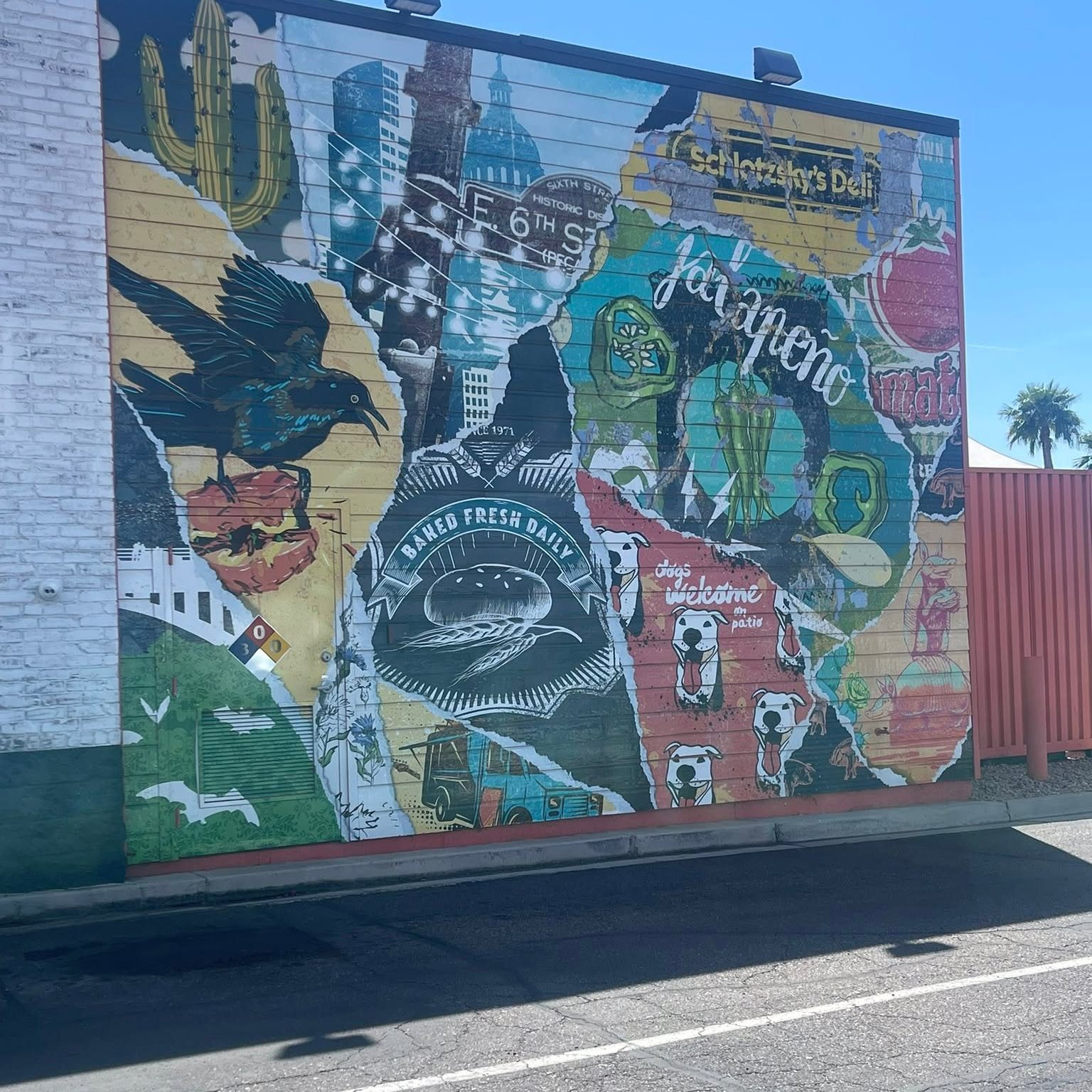
Choose the surface and viewing conditions before choosing the layout. The strongest graphic makes sense in the space where people will see it.
What does the space need to say?
A restaurant feature wall, a storefront window, and an event banner can all carry the same brand, but each has a different job. A wall might establish the atmosphere. A window might identify the business from the street. A banner might announce a single event or promotion.
Write one sentence that describes the result you want. For example, a reception wall could make visitors immediately confident they are in the right place. A temporary banner could help people find an event entrance. That purpose should guide the message, size, and placement.
Wall murals: design with the room
A wall mural becomes part of the architecture around it. Photograph the whole wall, including doors, furniture, outlets, light fixtures, and anything that will cover part of the finished graphic. Consider where people stand and how close they will be to the image.
Share the wall dimensions and describe the surface. Texture, paint condition, recent painting, and the environment should be discussed before material selection. Ask whether an inspection or adhesion assessment is appropriate. Do not assume that an image designed for one wall can be installed on a different surface without review.
For the artwork, give important details room away from corners and interruptions. A mural should still read clearly when furniture is in place and the room is being used normally.
Window graphics: consider both sides of the glass
Window graphics need to work with the view into and out of a space. Decide whether the main priority is identification, a promotional message, privacy, or a particular visual treatment. Photograph the windows from inside and outside, and note frames, handles, opening sections, and other obstructions.
Discuss the actual glass, existing films, lighting, and any building restrictions with the team before selecting a product. The outside appearance can change as indoor and outdoor light conditions change. Show the designer how the storefront looks during the hours when it needs to communicate.
Review it from the distance that matters
Ask to see the artwork in context. A simple mockup can help you judge how the graphic relates to the building or room. Check the hierarchy from the expected viewing distance and confirm that the main message is visible before smaller supporting details.
Color and contrast matter as much as size. Busy photographs can make lettering disappear, while an uncomplicated background can give a short message more presence. Use the final proof to check exact wording, contact details, dates, and the placement of anything close to an edge.
Send a useful brief before asking for a quote
- Photographs of the full space and close-ups of the surface.
- Width and height, with approximate measurements identified.
- The message and the audience you want to reach.
- Your logo, brand references, and any image assets.
- Indoor or outdoor use and the intended display period.
- Access, mounting, deadline, and property-owner requirements.
A&M Graphics offers murals, storefront graphics, signs, banners, and custom design from its Mesa shop. Bring the space and the message into the same conversation so the finished work feels like it belongs there.
Common questions
Can the same artwork work on a wall and a banner?
The brand elements can carry across, but the composition should be adapted to the dimensions, surface, and viewing distance.
What if I do not have finished artwork?
A&M Graphics can develop a concept or adapt existing files. Start with the message, space photographs, and the assets you have.
Make it your next project.
Talk through your vehicle, artwork, or space with A&M Graphics.
Explore murals, signs & banners